
Launching a product during a Global Pandemic
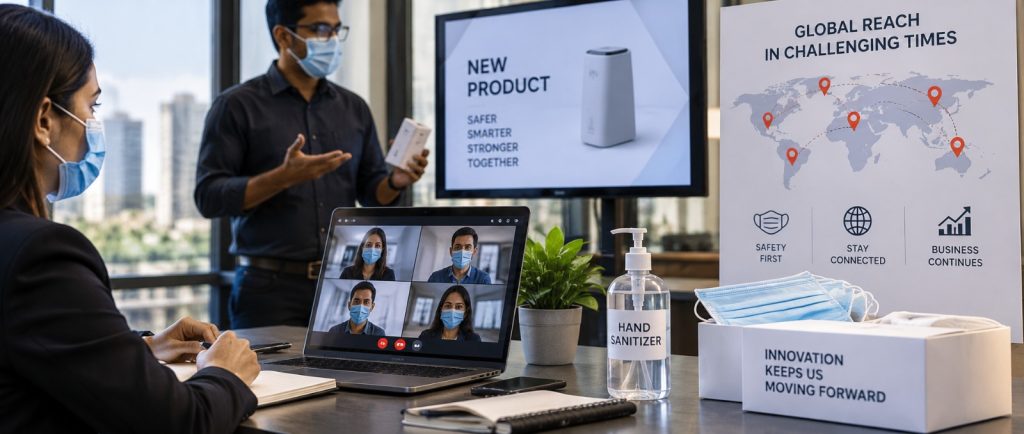
Commercialising Into the Unknown
In a crisis situation subject to rapid change, SMEs need a proactive plan to adjust and adapt how they lead their teams, speak to their customers, and manage their brands.
If you’re a small business owner, how do you launch a new product in a COVID-19-dominated world? A world where most customers are sitting behind their screens instead of going into stores?
That’s the challenge many businesses were facing as they launched new projects during the pandemic. Every campaign brought a new set of questions and challenges about how to reach customers, adapt messaging, and respond to a rapidly changing environment.
You’re not alone. Many small business owners and startup entrepreneurs were wondering how to market their products and services in this uncertain atmosphere. A strong go-to-market plan could help businesses reach potential buyers even when customers were no longer browsing in traditional brick-and-mortar stores.
Customers may never know how a company’s finance or HR department responds to a major unexpected event, but marketing sits center stage, with its moves reflected in every campaign, message, and channel. Businesses set the tone for how customers perceive the brand during difficult times.
Taking the right actions and finding the right message can be challenging, especially in a fast-changing situation. All companies should operate with integrity and trust even as they come under pressure from a rapidly evolving situation. Those with a product or service well-suited for difficult times must, meanwhile, tread lightly so customers do not feel that the brand is exploiting a crisis.
Engage in Scenario Planning
Define theoretical best, worst, and moderate scenarios that could play out during the crisis from the perspective of the business, its customers, and critical partners. Work with peers in other departments such as HR and finance to develop scenarios that apply to the overall business.
Marketing and sales must not rely simply on fast-changing scenarios, however, but must go further for their department and brand. Marketers must drill down to identify the specific challenges that customers, the brand, and the marketing organization could experience in each scenario and identify actions to take.
For example, if the best-case “business as usual” scenario involves advertising purchases during the IPL or a trade show, a worst-case scenario in which that event is canceled should identify alternative ways to reach customers.
Listen for Changes in Customer Sentiment and Behaviour
Long before the coronavirus emerged, consumer trust in both government and large brands had eroded. People increasingly aligned more closely with family, friends, and local businesses. The crisis further amplified the distrust customers had toward brands.
Brands could push against that wave by rising to the occasion and reestablishing trust through customer-centric actions.
Listen. Now more than ever, it’s important to know what customers feel and do, and why. Set up voice-of-the-customer (VoC) programs to listen for references to COVID-19 or other shifts. Use social listening to monitor customer discussions about health concerns or information needs relevant to your brand.
Ask sales and account management teams what they hear from the front lines. Monitor customer care emails, phone calls, and service chats for changes in concerns or sentiment.
Balance your response. Marketers must support customers and protect customer relationships while staying honest about what the firm can and cannot deliver at that time. Be careful about taking actions that provide short-term stability or gain for the firm at the expense of customer trust.
Anticipate Operational Impacts
Challenges to product and service delivery abound during a crisis. Closed factories and disrupted supply chains can create reduced supply on one side of the business, while customer questions create rising service demand on the other.
Businesses must adapt their messages to reflect on-the-ground realities while staying true to the brand’s values. Some important steps include:
Manage your promises. Set realistic expectations about service levels, product launch dates, product availability, and more. Consider pulling campaigns for products you cannot be sure you can produce and deliver. Evaluate current policies and consider reasonable changes, such as allowing cancellations or extending payment terms.
Create capacity to address customer service volumes. Craft proactive messages to distribute via email, social media, and the web to answer common questions. Also draft reactive scripts to help customer service representatives handle sensitive one-on-one interactions. Train qualified team members in functions with lower volumes to help manage demand from customer service channels.
Ramp up digital delivery. Promote apps and other mobile tools and services. Increase capacity for online transactions and digital interactions. Innovate ways to deliver your product or aspects of it online, such as telemedicine for routine doctor visits or online learning for students who cannot attend school.
Even as you enable digital options, understand that some people will always need to hear an empathetic human voice, especially during difficult times, and be prepared to offer it.
Optimize the marketing budget. All organizational functions will be called on to prioritize spending. Try to avoid across-the-board cuts. Instead, look for ways to drive efficiency and reduce or postpone obligations that won’t bring value or may even appear tone-deaf in the current environment.
Adapt the Marketing Plan
The next three to six months can bring significant societal changes that trickle down to the marketing plan. Use best-, worst-, and moderate-case scenarios to anticipate possible and likely changes and prepare alternative actions.
Event-based programs. Restrictions on large gatherings can affect businesses that serve these events and marketers that build campaigns around them. Develop alternative marketing ideas for physical events planned for the coming months.
Sports events may move to streaming delivery, conference expos may move online, and other physical experiences may require digital alternatives. Don’t wait until an event is cancelled to develop a plan. Learn instead from previous experiences where major trade events and conferences have had to adapt.
Deliver compelling content. More people may spend significant amounts of time at home during uncertain periods. Brands can provide lighthearted and uplifting, or informative and encouraging, content to people looking for support. This may also be a good time to relaunch or experiment with immersive formats such as VR content.
Secure media early. When businesses face the same market conditions, competition for key media placements can increase significantly. Brands may also have to compete with major political or cultural events for premium media space.
Work with media planners and publishers to secure access before key opportunities become unavailable.
Conclusion
Launching a product during a global crisis requires businesses to be flexible, customer-focused, and prepared for multiple scenarios. By listening closely to customers, anticipating operational challenges, adapting marketing plans, and strengthening digital delivery, brands can continue building relationships even in uncertain environments.
The businesses that adapt quickly while maintaining transparency and trust are better positioned to navigate disruption and find new opportunities for growth.